
Maintaining an Attitude of Gratitude
How would you feel if tomorrow morning your body refused to rise from bed? If illness stole even the simple freedom to move?
The Transformative Power of Gratitude
Life presents us with countless opportunities to complain, and too often, we do. We grow frustrated in traffic, voice dissatisfaction with our jobs, feel burdened by the disorder at home, and even become impatient with the boundless energy of our children. We lament the material things we believe we lack. But if we pause, even for a moment, and look deeper, we will see that life also gives us far greater reasons to be grateful.

“Awareness today. Wellness tomorrow. Prevention is power.”
Gratitude in Everyday Moments
We open our eyes, spring from bed, and rush into the day, complaining all the way. Yet somewhere, someone is confined to a hospital bed, staring at the ceiling, not knowing when they will take their last breath.
We complain about our children leaving toys scattered across the floor. Think about women who have suffered multiple miscarriages, who would give anything to hear the sound of little feet running through their home. Let us be grateful for the gift of parenting.
Let’s, for just a moment, think about parents forced to bury their young children after long battles with cancer or other tragedies. They long to hear their son’s voice or their daughter’s laughter just one more time. These are not just “stories.” These are people. Real people. With real pain.
We complain about our jobs, our bosses, and our co-workers. Yet tonight, families will go to bed hungry because there is no job, no paycheque, no food to fill their empty bellies.
When we are tempted to gripe about being stuck in traffic in air-conditioned cars, let’s pause and think of the single mother who clutches her handbag every morning, whispering prayers for safety as she makes her way to the taxi rank in the dark hours just to board three different taxis to get to work.
Or think of the sole breadwinners who are severely injured or lose their lives in tragic accidents on public transport, leaving children with no one to care for them. When we get into our cars tomorrow morning, let’s be thankful.
Science Insight
Gratitude has been shown to strengthen the immune system and reduce inflammation, supporting faster recovery from illness. People who practice gratitude regularly are less likely to suffer from depression and many chronic diseases.
Many of us sink into the comfort of warm beds and air-conditioned homes after a bitterly cold winter’s day. Meanwhile, others are scarred from severe burns when their shacks caught alight from improvised heating methods, such as open fires or candles, simply to stay warm or have light. Let us never take for granted the things that we have.
Science Insight
Neuroscience research shows that gratitude activates the brain’s reward system (releasing dopamine and serotonin). This means gratitude doesn’t just change your perspective—it physically boosts feelings of joy, calm, and motivation.
Lessons from Hard Places
Personally, it has been gratitude and prayer that have carried me through the darkest valleys of my life. When despair whispered for me to give up, gratitude reminded me of others enduring storms far greater than mine. That simple shift in perspective gave me courage, strength, and the will to keep moving forward with an attitude of gratitude.
Science Insight
Studies from Harvard Medical School show that people who practice daily gratitude report higher levels of happiness, better sleep, and fewer physical symptoms of stress. Gratitude literally rewires the brain to focus on what is good, helping us build resilience even in hardship.
Every morning, I see frail, elderly men and women wait in line outside local clinics before sunrise. Their patience and endurance humble me. Never take your health for granted.
My eyes welled up when I heard of a man who struggled to swallow his food but did not reach for water to wash it down. When asked why, he said it was a habit. He grew up in a village where water was so scarce, people walked miles to collect it. That scarcity followed him into adulthood, long after water became available.
We should never take this for granted, because 2.1 billion people globally still lack access to safely managed drinking water (WHO/UNICEF, 2025)
A Call to Open Our Eyes
While we sleep in warm beds, someone curls up on cold concrete. While we enjoy hot meals, around 673 million people experienced hunger in 2024 (UNICEF/FAO, 2025). While we complain about not owning the latest sneakers, others walk barefoot, their feet bruised and bleeding.
We fool ourselves into believing our comforts are always the result of hard work. But not everyone was given the same starting point. Some never had the privilege of a stable home, a decent education, or even a fair chance to earn a living, especially in places burdened by high unemployment.
Too many of us have become numb to human suffering. Instead of seeing people, we see shadows we’d rather avoid. We forget that safety, warmth, and food are privileges, not guaranteed for all.
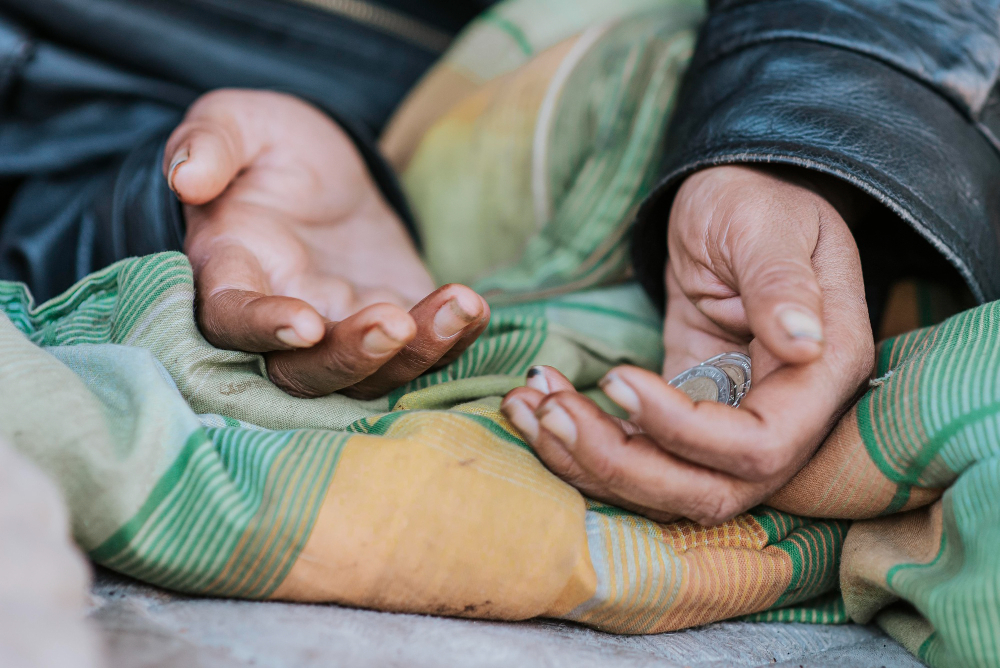
Did you ever ask why we cling to clothes and shoes, gathering dust when someone out there could be wearing it? I often wish there were drop-off depots in every town and city where people could donate canned food, bars of soap, sanitary towels for young girls and the clothes, or shoes we no longer use. Perhaps this idea will move someone to start such a depot.
Science Insight
Research published in Frontiers in Psychology shows that gratitude strengthens empathy and reduces aggression. Those who cultivate gratitude are less likely to lash out, even when provoked. Gratitude softens the heart.
Choose Gratitude
If the above didn’t stir up a little feeling of gratitude, then maybe this will:
Around 330 million people face absolute homelessness—the state of having no shelter at all (DevelopmentAid, 2025). We should be grateful for the roof above our heads.
2.2 billion people live with some form of vision impairment, and at least 43 million are blind (WHO, 2025). We should be thankful for the gift of sight.
According to the WHO Commission on Social Connection, loneliness and social isolation contribute to about 871,000 deaths every year. That is nearly 100 deaths every hour (WHO, 2025). We should appreciate all the people we have in our lives, no matter how imperfect they may be.
Gratitude changes everything. It softens hearts. It opens eyes. It transforms complaints into appreciation and despair into hope.
Be grateful for every moment. For every breath. For every blessing, no matter how small. Take nothing for granted, because life can change in a heartbeat. One accident. One diagnosis. One unexpected twist and everything we hold secure can be gone.
Let us stop comparing ourselves to those who have more. Instead, compare ourselves to those who have less or nothing at all. This simple shift can help us become more grateful for what we already have.
Science Insight
Gratitude journaling for just 5 minutes a day has been shown in some studies to raise long-term happiness levels by about 10% or more (Emmons & McCullough, 2021).
Final Reflection
So today, before you complain—PAUSE. Look around you. Notice the blessings tucked into the ordinary.
Whisper a prayer of thanks because gratitude doesn’t just change how we see life. It changes how we live it.
Excellent article. Thank you for the gentle reminder of gratitude. To often, the many things we take for granted.
God bless you.